[FED] Macau Association for the Promotion of Education Research Visited the Faculty of Education
[教育學院] 澳門教育研究促進會代表團訪問教育學院
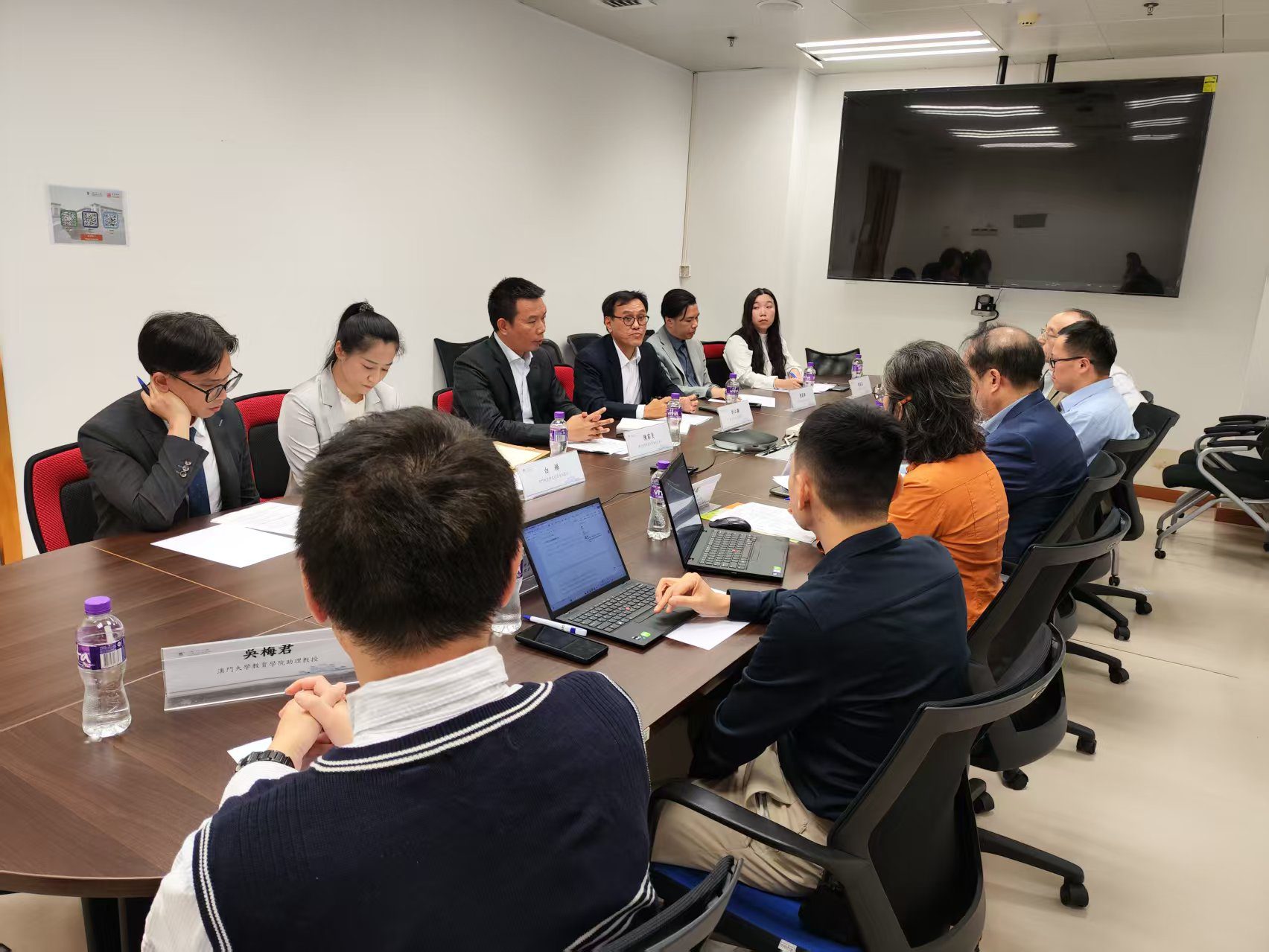
On 4 December 2025, a meeting between representatives from the Faculty of Education (FED) of the University of Macau (UM) and the Macau Association for the Promotion of Education Research was held in E33-1003 of FED. The delegation from the Macau Association for the Promotion of Education Research was led by Chan Ka LEONG, Founding President, Member of the Executive Council of the Macao Special Administrative Region (Macao SAR), and Vice Principal of Macau Fong Chong School, including Kong Hong HUI, President and Vice Principal of Sha Lei Tau Fong Chong School; Teng Fong CHAN, Vice President of Supervisory Council, Office Director of Diocesan Catholic Education Commission, and Adjunct Assistant Professor of University of Saint Joseph; Hua BAI, Secretary-General and Director of Kindergarten Macau Fong Chong School; Ka Ian CHE, Director and Vice Principal of Instituto Salesiano; and In Hou LEI, Director and Vice Director of Macao Chamber of Commerce Qingzhou Secondary School.
Representatives from FED included Prof. Lianghuo FAN, Dean and Director of Centre for STEM and AI Education; Prof. Dongbo ZHANG, Associate Dean (Teaching and Curriculum Development) and Programme Coordinator of Doctor of Education; Prof. Keang-ieng VONG, Assistant Dean (School Engagements and External Relations); Prof. Xiufeng LIU, Director of Educational Testing and Assessment Research Centre; Prof. Nan ZHOU, Director of Centre for Educational Psychology and Early Childhood Education; Prof. Chun Seng KAM, Programme Coordinator of Master of Science in Data Science (Analytics in Teaching and Learning); and Prof. Mei-Jiun WU.
At the outset of the meeting, both parties completed the introduction of participating leaders and professors. Subsequently, they first reviewed the foundation and current status of cooperation between the Macau Association for the Promotion of Education Research and UM, and conducted in-depth discussions on core issues. All participating representatives pointed out that the decline in school-age population caused by low fertility rates has become a pressing challenge facing basic education in Macau, which not only restricts school development but also gives rise to related social issues. There is an urgent need for practical and operable response strategies rather than mere theoretical descriptions. The participating parties then introduced relevant government research findings and clarified a two-phase development goal: prioritizing stability in the short term, focusing on ensuring the survival of vulnerable primary and secondary schools, avoiding large-scale layoffs through resource inclination, and achieving the emergency relief goal; taking progress as the guiding principle in the long term to promote the comprehensive improvement and optimization of the education system.
Based on this, the participants put forward specific action recommendations: First, safeguard schools by expanding adult education to enrich the breadth of educational services and promoting the transformation of formal schools towards diversification. Second, support teachers in their transformation and upgrading by developing emerging courses such as artificial intelligence, health management, physical literacy, and language application to enhance teaching adaptability.
Finally, both parties conducted further discussions on education development plans and reached consensus. In the future, they will focus on promoting the characteristic development of Portuguese education and deepening the construction of community learning networks. Through multiple approaches—including educational resource reuse, external learning expansion, special education curriculum optimization, strengthening of family education guidance, and innovation in art and physical education—a three-dimensional education system adapting to the needs of Macao’s social development will be built.
Rooted in practical needs and pooling the wisdom of industry and academia, this meeting has provided a practical action framework for the sustainable development of basic education in Macau against the backdrop of low fertility rates, and laid a solid foundation for the further deepening of cooperation between the two parties.
 |
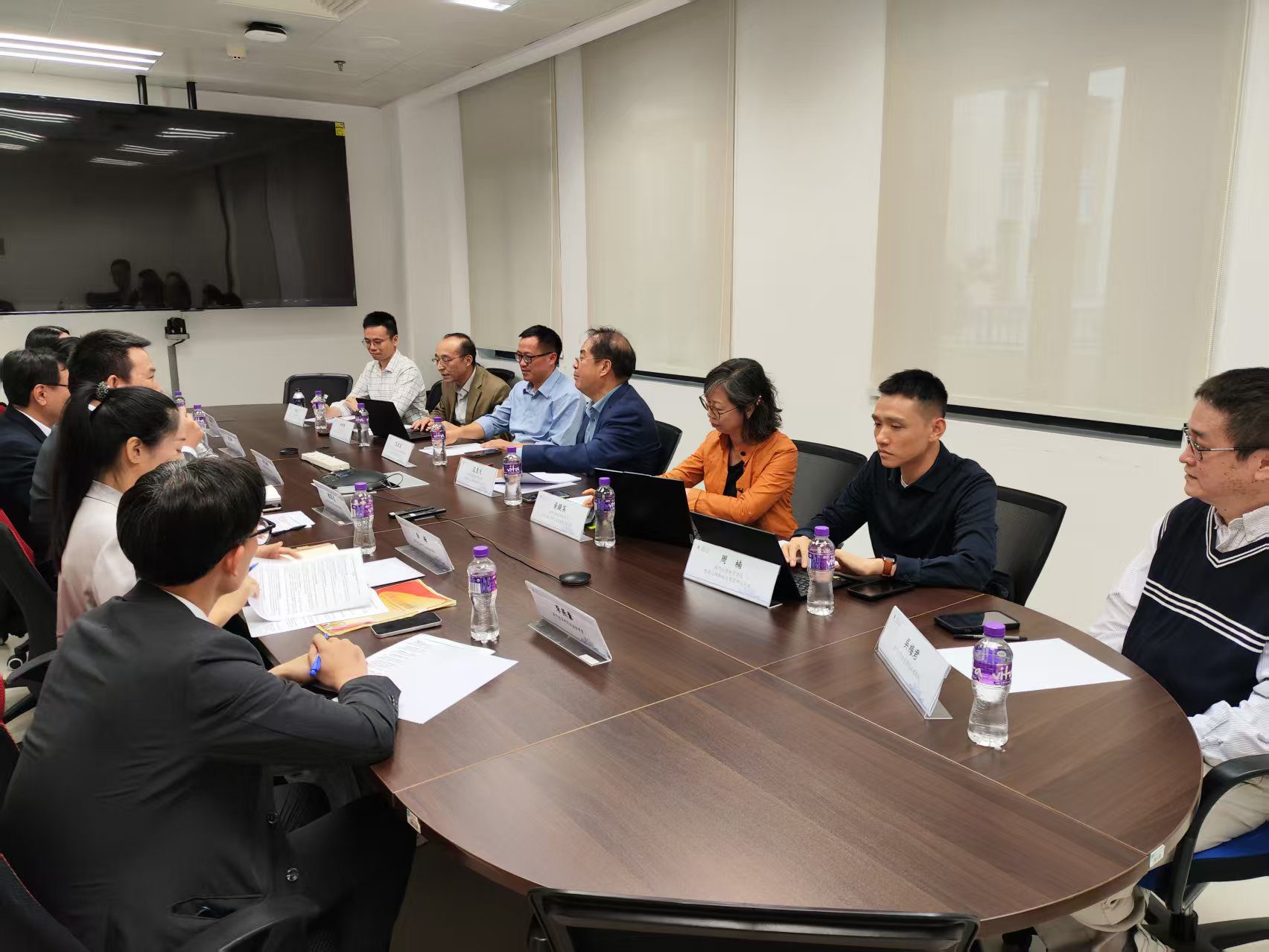 |
| Meeting in Progress | |
Thank you for your kind attention.
Faculty of Education
2025 年 12 月 4 日,澳門大學教育學院與澳門教育研究促進會代表團會談於教育學院 E33-1003 會議室順利舉行。澳門教育研究促進會代表團由澳門特別行政區行政會委員、澳門坊眾學校副校長陳家良創會會長率領,成員包括澳門沙梨頭坊眾學校副校長許江雄會長,澳門天主教教育委員會辦事處主任、聖若瑟大學兼任助理教授陳庭鋒副監事長,澳門坊眾學校幼稚園主任白樺秘書長,慈幼中學副校長謝嘉茵理事及澳門中華總商會附設青洲中學副主任李燕豪理事。
教育學院代表包括院長兼科技與人工智能教育研究中心主任范良火教授,副院長(教學及課程發展)兼教育博士課程統籌人張東波教授,助理院長(學校協作與對外關係)黃鏡英教授,教育測驗與評核研究中心主任柳秀峰教授,教育心理與幼兒教育中心主任周楠教授,理學碩士學位(數據科學—教學分析)課程統籌人甘俊生教授以及吳梅君教授。
會議伊始,雙方完成與會領導及教授介紹環節。其後,雙方首先回顧澳門教育研究促進會與澳門大學的合作基礎與現狀,並聚焦核心議題展開深入探討。與會代表一致指出,少子化引發的學齡人口減少已成為澳門基礎教育面臨的緊迫挑戰,不僅制約學校發展,更衍生相關社會問題,亟需兼具實踐性與可操作性的應對策略,而非單純的理論描述。接著,與會方介紹政府相關研究成果,明確兩階段發展目標:短期以穩定為先,重點保障弱勢中小學校存活,通過資源傾斜避免大幅裁員,實現救急目標;長期以進步為綱,推動教育系統的全面完善與優化。基於此,與會者提出具體行動建議:一是保學校,通過拓展成人教育豐富教育服務寬度,推動正規學校向多元化方向轉型;二是保教師,支持教師轉型升級,開發人工智慧、健康管理、體育素養、語言應用等新興課程,提升教學適配性。
最後,雙方圍繞教育發展方案展開進一步溝通並達成共識。未來將重點推動葡語教育特色發展,深化社區學習網絡建設,通過教育資源復用、校外學習拓展、特殊教育課程優化、家庭教育指導強化及藝體教育創新等多元途徑,構建適應澳門社會發展需求的立體化教育體系。本次會談立足實踐需求,匯聚產學界智慧,為少子化背景下澳門基礎教育的可持續發展提供了切實可行的行動框架,也為雙方後續深化合作奠定了堅實基礎。
|
|
| 會議進行中 | |
教育學院 謹啟