
UM’s Micro and Nano Robot Research Ranks Among World’s Best
澳大微納機器人技術研究躋身全球前列

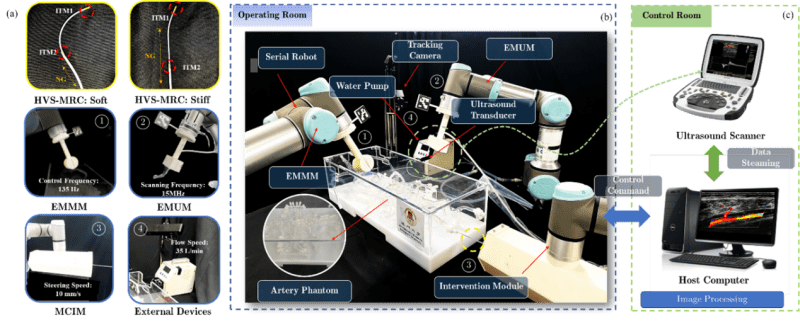
多臂協作超聲引導磁控變剛度導管機器人用於無輻射血管介入治療
Figure 1 Multi-arm collaborative ultrasound-guided magnetically actuated variable-stiffness catheter robot for radiation-free vascular interventional therapy
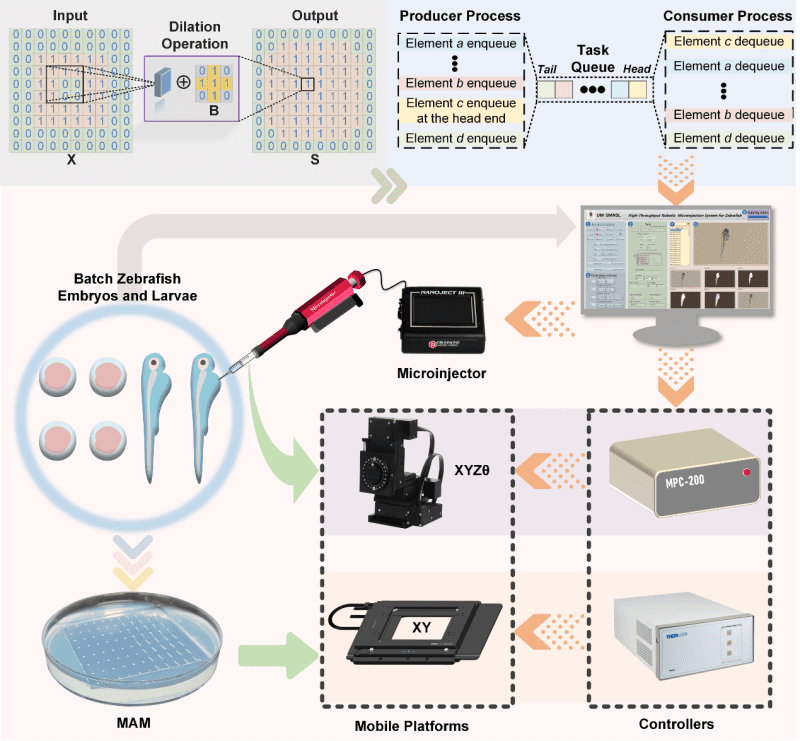
用於斑馬魚胚胎及幼魚精准注射的微操作機器人系統
Figure 2 Micromanipulation robot system for precise injection of zebrafish embryos and larvae
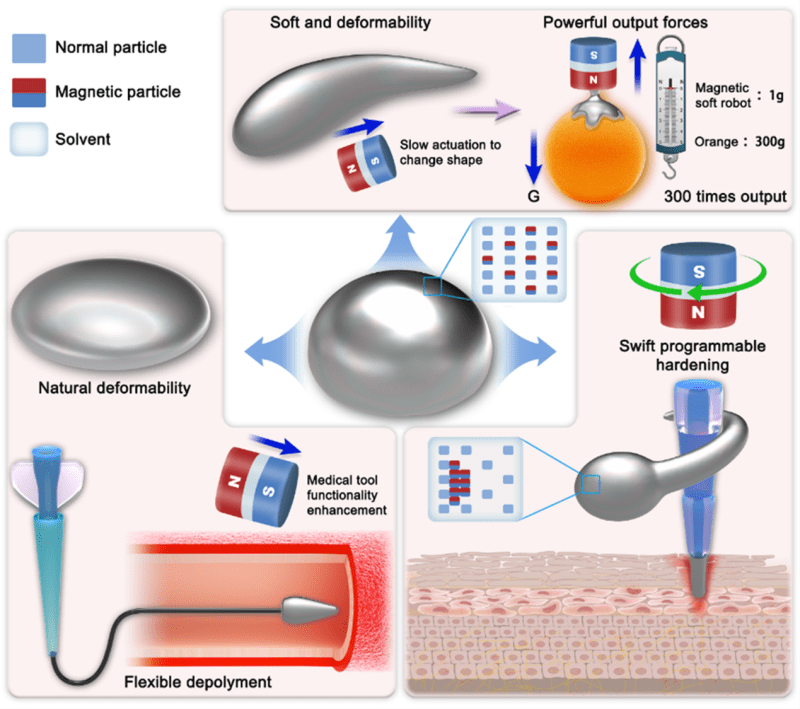
磁控按需硬化大力輸出軟體醫療微機器人
Schematic diagram of a magnetically controlled on-demand hardening high force-output soft medical microrobot
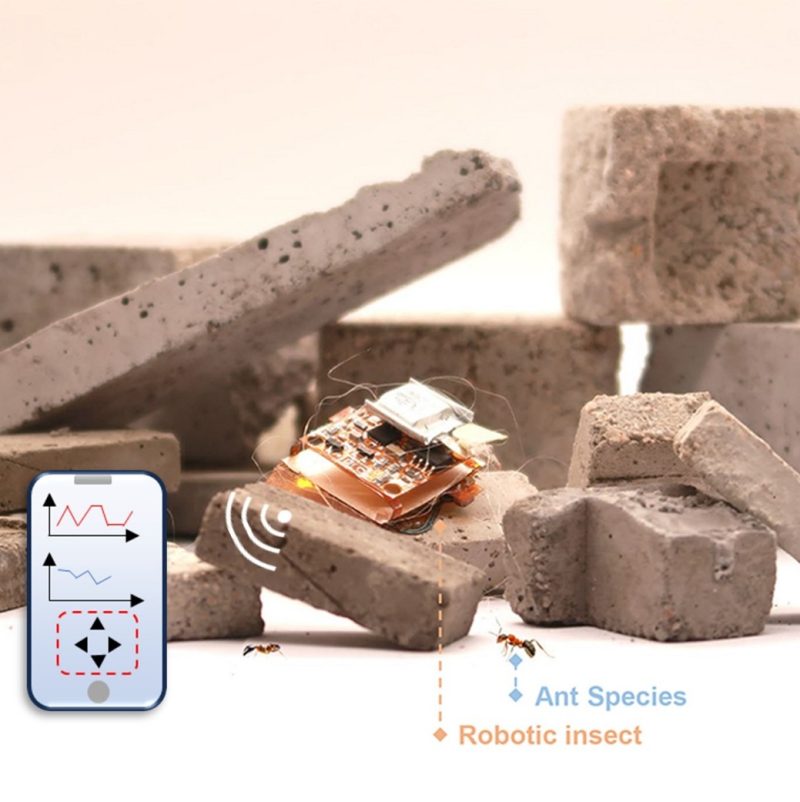
澳大研發的昆蟲尺度微型機器人,用於災後搜救等應用,
成果發表於Science Robotics, IEEE Transactions on Robotics, Science Advances等國際頂級期刊
UM has developed insect-scale microrobots for applications such as disaster search and rescue,
with findings published in top international journals such as Science Robotics, IEEE Transactions on Robotics, and Science Advances
UM’s Micro‑ and Nano‑Robot Research Ranks Among World’s Best
The University of Macau (UM) and The Hong Kong Polytechnic University (PolyU) have recently established the first jointly funded laboratory between Macau and Hong Kong — the Joint Laboratory of Robotics and Embodied Intelligence — and simultaneously launched a dual doctoral degree programme for joint PhD student training. This groundbreaking collaboration not only marks a new breakthrough in scientific research and talent cultivation between the two regions, but also serves as a significant recognition and affirmation of UM’s long-term dedication and outstanding achievements in the field of robotics. At the same time, the University’s research has entered a new phase, with its recent accomplishments in micro/nano robotics technology gaining international acclaim, firmly placing its research capabilities among the world’s top tier.
According to the annual academic performance statistics from two major international authoritative databases, Scopus and Web of Science, UM has demonstrated strong competitiveness in the fields of micro/nano robotics and micro/nano manipulation, publishing over 90 high-level research papers. This places UM among the top institutions in the Guangdong-Hong Kong-Macao Greater Bay Area, within the first tier in China, and in the global top 50. In the core specialized area of micro/nano positioning and micro-grippers, UM has shown the strength of a “dominant champion,” fully reflecting its core research capabilities and world-class academic influence in the field of micro-robotics.
In addition to its advantage in the quantity of papers, UM has also achieved fruitful results in the publication of high-quality papers. In the field of micro/nano robotics, UM has published three papers in Science Robotics and eight papers in IEEE Transactions on Robotics, demonstrating its research capacity to consistently contribute original achievements in top-tier platforms.
In recent years, UM has continuously strengthened its foundation in robotics research and actively supported the collaborative development of robotics science and the cultivation of high-end talent in the Greater Bay Area. Relying on platforms such as the Faculty of Science and Technology, the State Key Laboratory of Internet of Things for Smart City, and the State Key Laboratory of Analog and Mixed-Signal VLSI, UM has assembled a high-level research team. It has made continuous progress in theoretical exploration, technological innovation, and practical application, with research outcomes widely applied in fields such as intelligent manufacturing, precision medicine, and autonomous driving. In the latest international authoritative statistics, UM has performed excellently in several sub-fields, including micro/nano robotics, micro-manipulation, and micro/nano positioning, further establishing its position as a top-tier research institution in the global robotics academic community, particularly in the field of micro/nano robotics.
These research achievements reflect UM’s long-term dedication and strategic布局 (layout) in the field of micro/nano robotics. In the future, UM will continue to leverage the scientific and technological development advantages of the Greater Bay Area, deepen core technology research, consolidate and expand its globally leading research status, and contribute “UM Wisdom” to promoting innovation and industrial development in micro/nano robotics technology for the Greater Bay Area and the world.
澳大微納機器人技術研究躋身全球前列
澳門大學與香港理工大學近日成立首個港澳兩地共同資助的聯合實驗室—“機器人與具身智能聯合實驗室”,並同步啟動聯合培養博士研究生雙學位項目,這項開創性合作標志著兩地在機器人科研及育材上的新突破。澳門大學在機器人研究領域具有深厚的研究實力,尤其是微納機器人技術領域的研究成果近期更獲國際權威認可,科研實力躋身全球前列。
根據 Scopus 與 Web of Science 兩大國際權威數據庫全年度學術成果統計,澳大在微納機器人與微納操作領域展現出強勁的競爭力,發表逾90篇高水平研究論文,位列粵港澳大灣區前列,同時位居中國第一梯隊、全球前50位。在微/納定位及微夾持器這一核心細分領域,澳大更是展現出“單項冠軍”的實力。充分體現其在微機器人研究領域的核心科研力量與世界級的學術影響力。除論文數量優勢外,澳大在高質量論文發表方面同樣成果豐碩。在微納機器人領域,澳大已發表3篇 Science Robotics 論文 與 8篇 IEEE Transactions on Robotics 論文,展現其在頂級平台持續貢獻原創成果的科研能力。
澳門大學近年在機器人研究領域不斷厚植基礎,積極支持粵港澳大灣區機器人科研協同與高端人才培養。依托科技學院、智慧城市物聯網全國重點實驗室、模擬與混合信號集成電路全國重點實驗室等平台,組建了高水平的科研團隊,在理論探索、技術創新與實際應用上持續取得進展,研究成果廣泛應用於智能制造、精準醫療、自動駕駛等領域。在最新的國際權統計中,澳大在微納機器人、微操作、微/納定位等多個細分領域表現卓越,進一步確立其在全球機器人學術界,尤其是微納機器人領域的頂尖科研實力。
上述科研成果體現了澳大在微納機器人領域的的長期深耕與戰略布局。未來,澳大將繼續依托粵港澳大灣區科創發展優勢,深化核心技術攻關,鞏固並拓展全球領先的科研地位,為推動大灣區乃至全球微納機器人技術創新與產業發展貢獻“澳大智慧”。