【CMS Scholarly Activity】 The Fourth Session of “Silent Radiance of Unity – Macao in Harmony” Multicultural Salon Successfully Concludes Judaism and Hinduism in Dialogue: Exploring Diversity, Inclusion, and the City’s Future
【澳門研究中心學術活動】「融光不語・和諧澳門」多元文化沙龍圓滿舉行 猶太教與印度教對談 共探多元共融與城市未來
猶太教與印度教對談 共探多元共融與城市未來
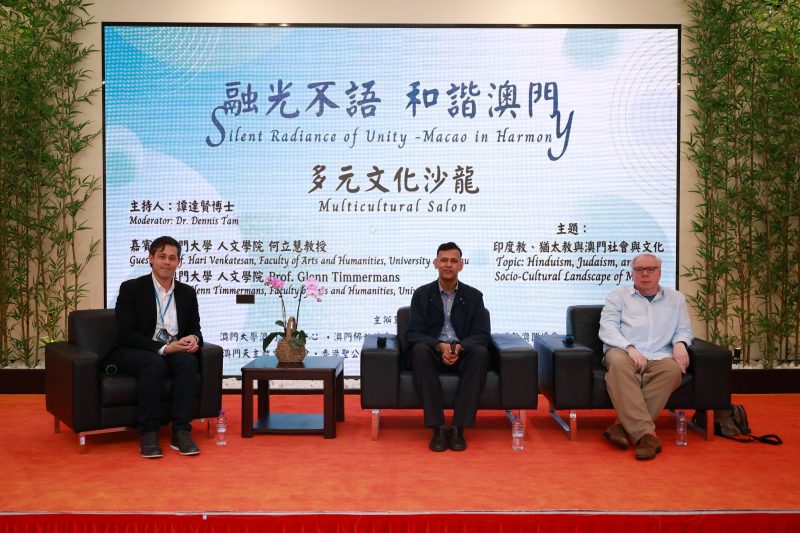
由澳門大學澳門研究中心聯同澳門佛教總會、澳門道教協會、巴哈伊教澳門總會、澳門天主教文化協會、聖公會澳門傳道地區及澳門伊斯蘭文化交流促進會共同策劃的「融光不語・和諧澳門」多元文化沙龍,最後一場活動於 3 月 25 日中午 在澳門大學崇文樓大堂舉行,為整個系列活動作結。是次沙龍以「猶太教、印度教與澳門社會與文化」為主題,邀請到澳門大學的 Hari Venkatesan 教授(印度教)及 Glenn Timmermans 教授(猶太教)擔任主講嘉賓,從信仰理念、生活實踐與青年培育等層面,分享兩大古老宗教在當代澳門社會中的意義。
兩位講者結合多年於澳門生活與教學的經驗,指出澳門作為中西文化交匯之地,長期形成兼容並蓄的社會氛圍,使不同宗教與文化背景的人士能夠在尊重與理解中共處。日常生活中的細微互動與跨文化交流,正體現出澳門深厚的共融傳統。
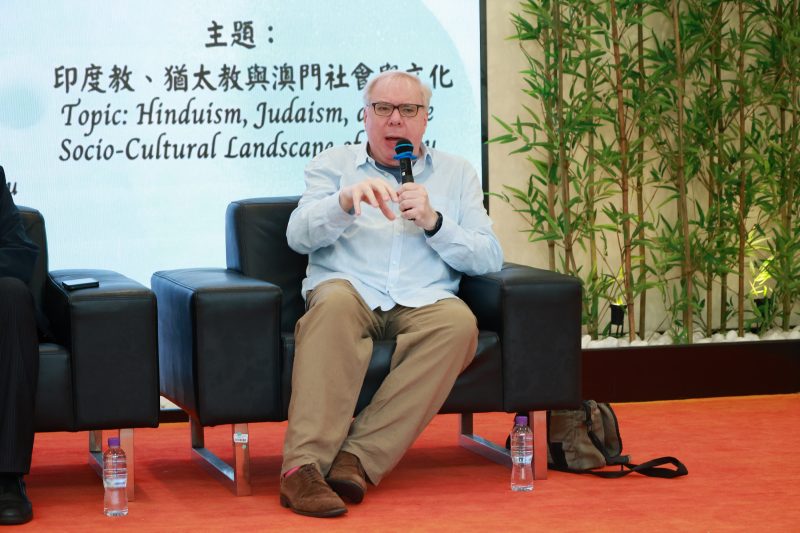
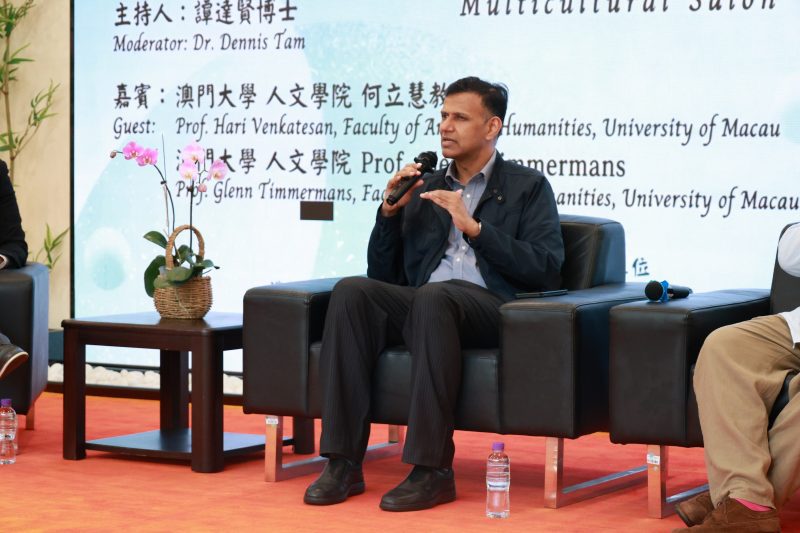
在具體討論中,Venkatesan 教授從印度教文化中,強調人類本質上的連結與整體性。他指出,此一宇宙觀不僅是哲學概念,更是一種生活態度,在多元文化環境中提醒人們以開放與包容的心態看待差異,從而促進更深層次的社會和諧。Timmermans 教授則從猶太文化中對家庭和傳統文化實踐的重視,表示每個族群都有各自特色的文化,既要以包容的態度去相互認識,也要摒棄偏見,特別是在全球化與多元社會背景下,透過持續學習與理性對話,培養年輕一代的文化理解能力。
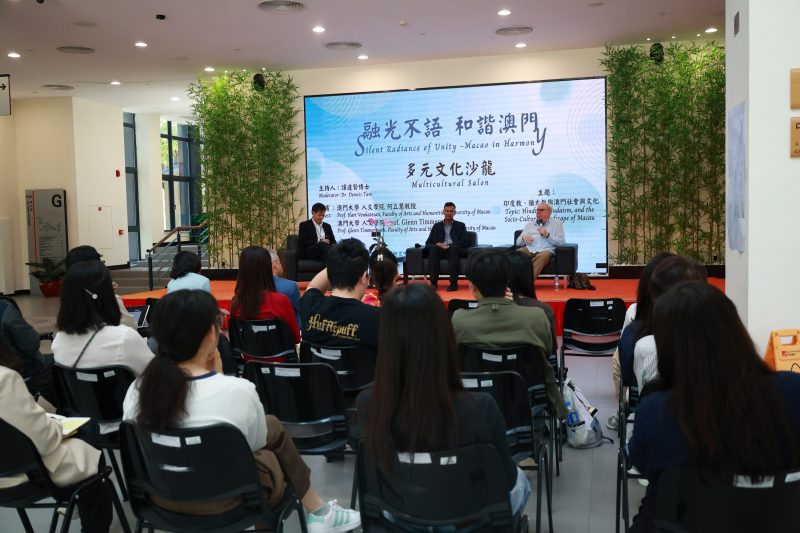
對談亦涉及節慶活動與飲食習慣等文化實踐層面。兩位講者指出,這類日常文化行為在多元社會中既可能產生適應上的差異,也同時提供跨文化接觸與溝通的實際場景,成為理解他者的重要切入點。在談及城市未來時,兩位講者均認為,持續對話、制度包容及青年參與,是多元社會保持穩定與發展的重要因素。
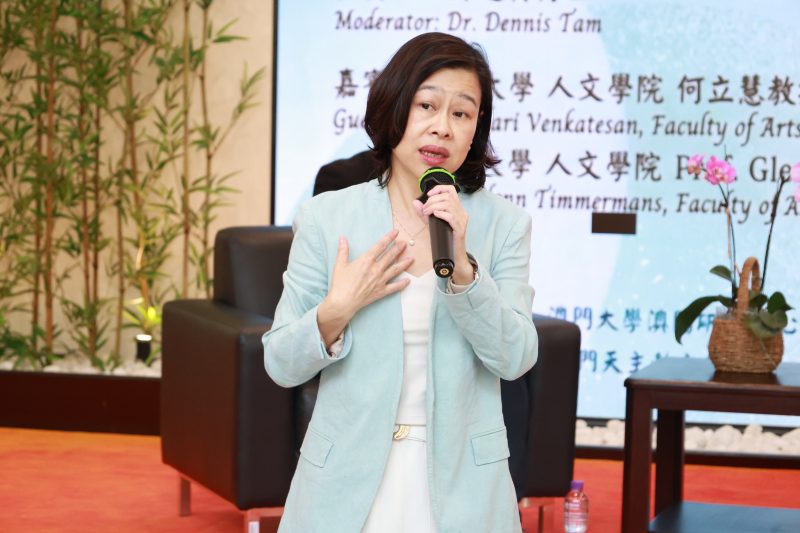
沙龍尾聲,澳門大學澳門研究中心主任林玉鳳總結指出,系列沙龍不僅深化公眾對不同信仰的理解與尊重,更展現澳門作為多元文化城市的包容精神與發展潛力,為未來持續推動跨宗教對話與社會共融奠定良好基礎。
【展覽資訊】
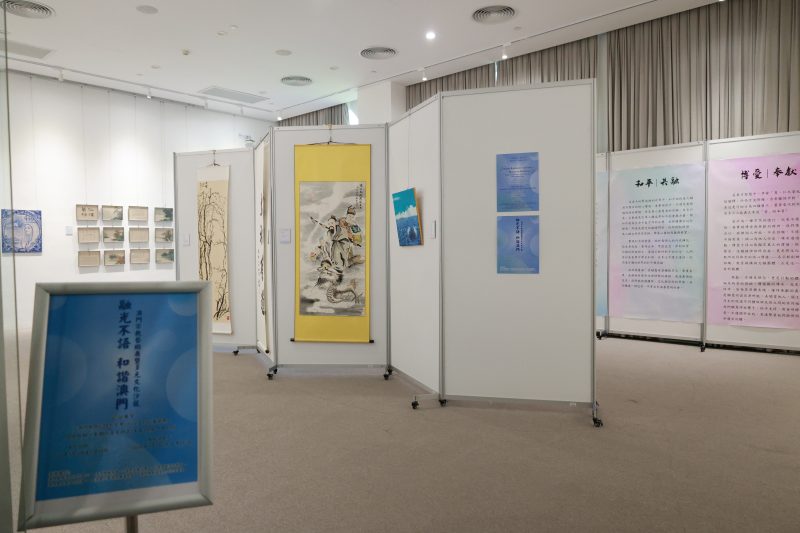
地點: 澳門大學 E34 崇文樓 G016 多功能展覽廳
開放日期: 星期一至星期五(10:00 a.m. – 6:00 p.m.)
展覽日期: 2026 年 3 月 5 日至 3 月 31 日
The Third Session of “Silent Radiance of Unity – Macao in Harmony” Multicultural Salon Successfully Concludes
Judaism and Hinduism in Dialogue: Exploring Diversity, Inclusion, and the City’s Future
The final session of the “Silent Radiance of Unity – Macao in Harmony” Multicultural Salon, jointly organized by the Centre for Macau Studies (CMS) of the University of Macau (UM) and the Buddhist Association of Macau, Macao Taoist Association, The Spiritual Assembly of the Bahá’ís of Macau, Macao Catholic Culture Association, Hong Kong Sheng Kung Hui Missionary Area of Macau, and the Macau Islamic Cultural Exchange Promotion Association, was held at noon on 25 March at the UM Cultural Building, marking the conclusion of the salon series. The session, themed “Judaism, Hinduism, and Macao Society and Culture,” featured Prof. Hari Venkatesan (Hinduism) and Prof. Glenn Timmermans (Judaism) from UM as keynote speakers. Drawing on perspectives from belief traditions, daily practices, and youth development, the speakers discussed the contemporary relevance of two ancient religious and cultural traditions within Macao’s diverse social context.
Both speakers reflected on their years of living and teaching in Macao, noting that as a long-standing meeting point of Eastern and Western cultures, the city has developed an inclusive social environment that supports coexistence among people of different religious and cultural backgrounds. Everyday interactions and cross-cultural exchanges were highlighted as important foundations of Macao’s tradition of diversity and social integration.
In the discussion, Prof. Venkatesan introduced the Hindu concept emphasizing the interconnectedness and holistic nature of humanity, explaining that such a worldview influences how individuals understand social relationships and collective responsibility. He remarked that this perspective, manifested through cultural practices and everyday life, encourages openness and inclusiveness in multicultural environments, contributing to social harmony. Prof. Timmermans, meanwhile, shared insights from Jewish culture regarding the importance of family, education, and the continuity of cultural traditions. He noted that while different communities maintain distinct identities, mutual understanding requires openness and the avoidance of prejudice, particularly in an era of globalization and increasing social diversity. He emphasized the role of continuous learning and rational dialogue in fostering cultural understanding among younger generations.
The dialogue also touched upon cultural practices such as festivals and dietary traditions. The speakers observed that while such practices may present challenges of adaptation in diverse societies, they also provide concrete opportunities for cross-cultural interaction and communication, serving as practical entry points for understanding others. In discussing Macao’s future development, both speakers agreed that sustained dialogue, institutional inclusiveness, and youth engagement are key factors in maintaining social stability and promoting long-term development in a multicultural city.
In her concluding remarks, Prof. Lam Iok Fong, Director of CMS, noted that the salon series, through the exchange of experiences and perspectives across different religious and cultural traditions, has enhanced public understanding and mutual respect. She emphasized that the series also highlighted Macao’s inclusiveness and potential as a multicultural city, laying a solid foundation for future interfaith dialogue and social cohesion.
【Exhibition Information】
Venue: Multifunctional Exhibition Hall, G016, Cultural Building (E34)
Opening Hours: Monday to Friday (10:00 a.m. – 6:00 p.m.)
Exhibition Period: 5–31 March 2026