【CMS】Macau Studies Seminar Series: Dr. Chui Sai Ping on China’s Five-Year Plans and Macao: Alignment from the First through the 14th—and Looking to the 15th
【澳門研究中心】澳門研究系列講座:崔世平博士談五年規劃與澳門——從「一五」至「十四五」到「十五五」的對接與展望
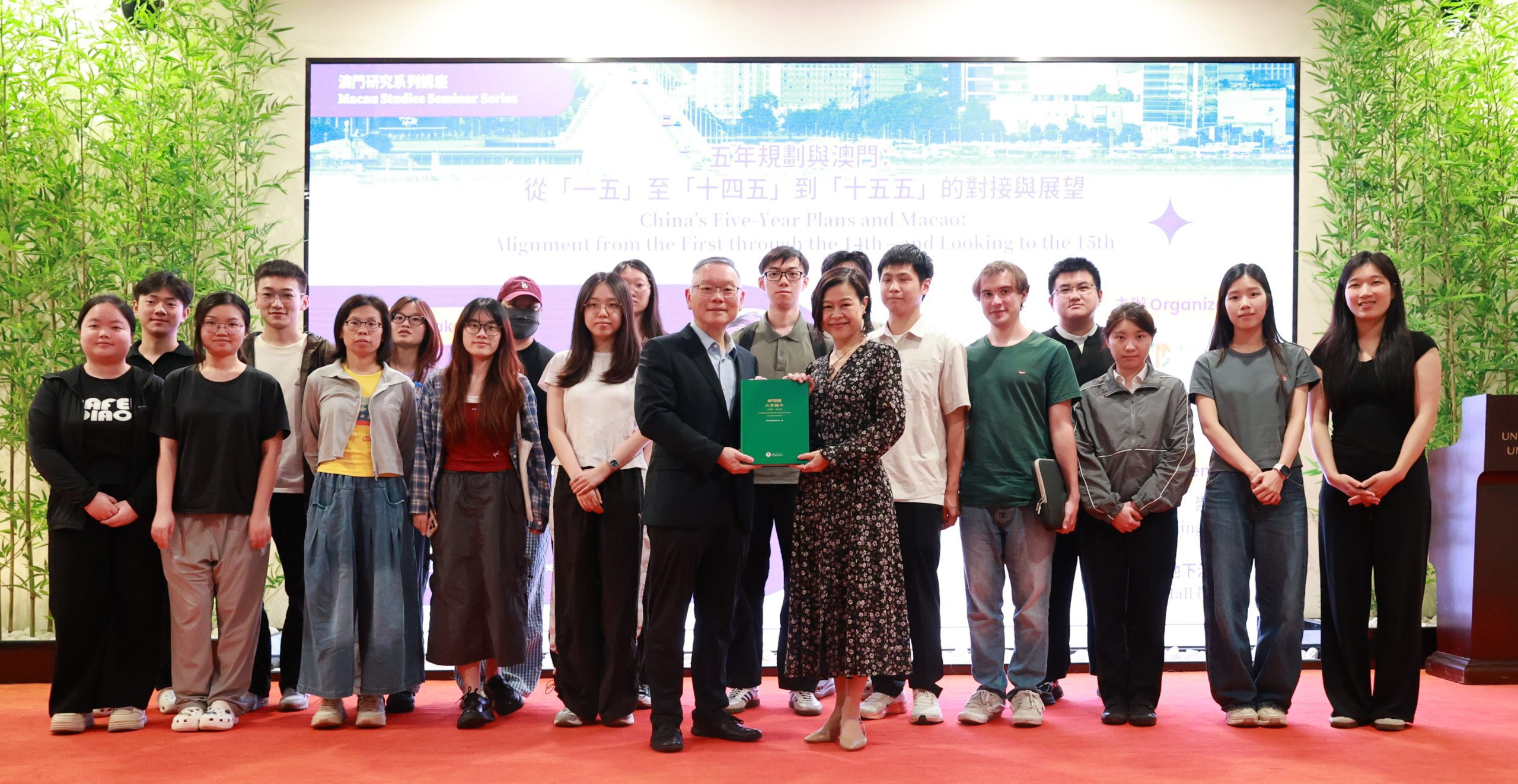
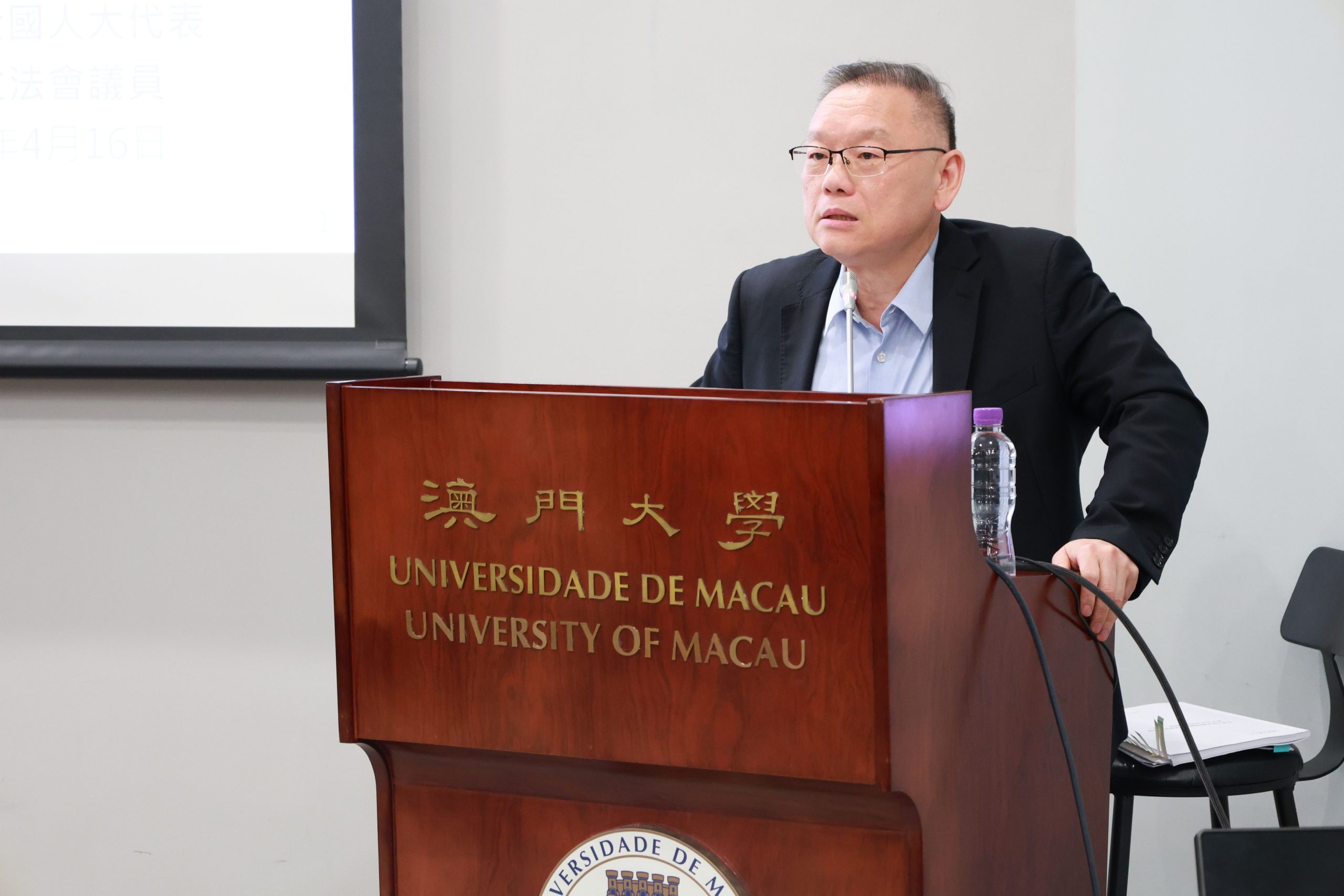
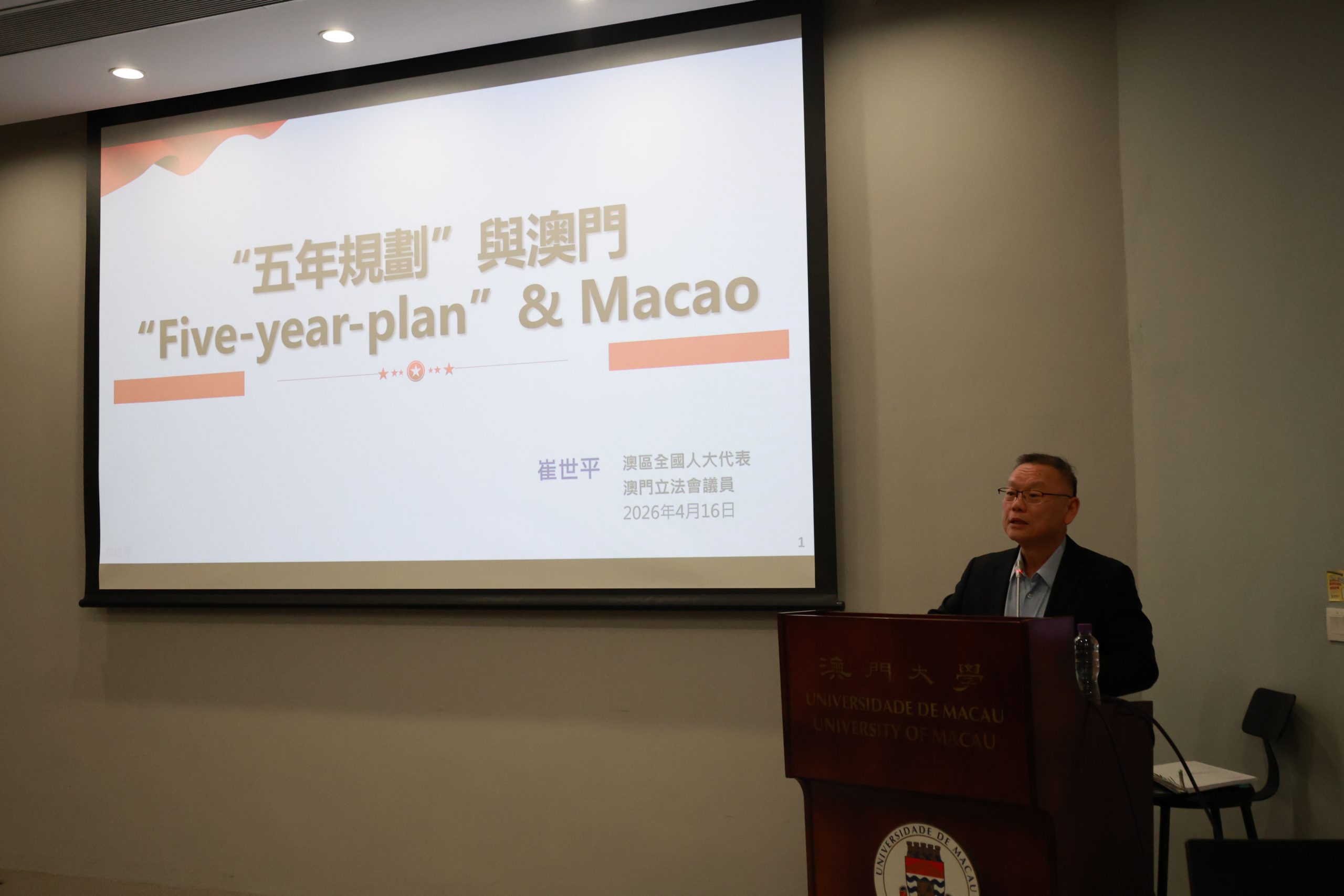
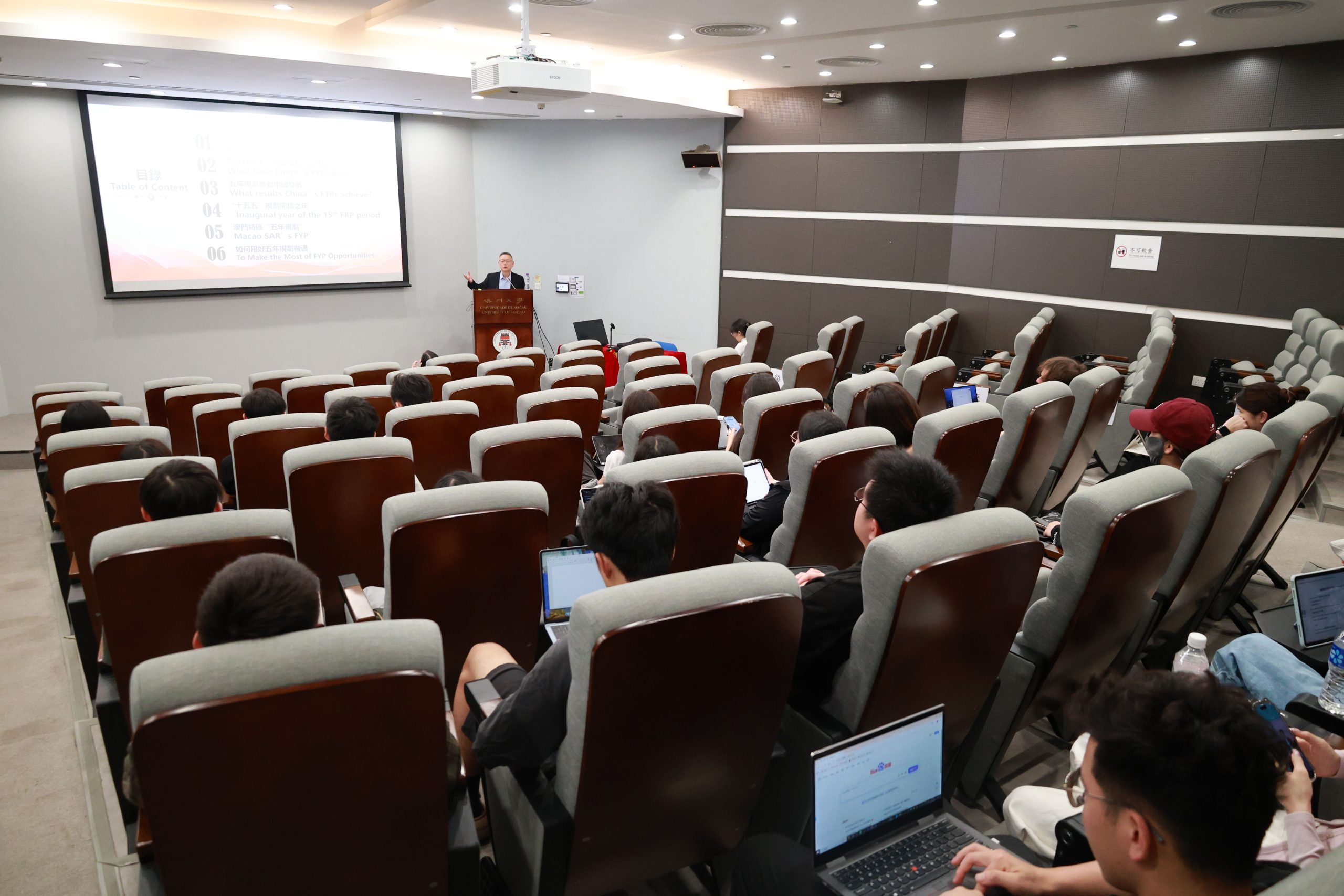
澳門大學澳門研究中心於 4 月 16 日在崇文樓舉辦「澳門研究中心講座系列」,邀請澳門特別行政區第十四屆全國人民代表大會代表、立法會議員崔世平博士主講,題為「五年規劃與澳門:從『一五』至『十四五』到『十五五』的對接與展望」。講座圍繞國家五年規劃的歷史脈絡、核心內容及其與澳門特區發展的關聯,進行系統而深入的探討。
講座中,崔世平博士指出,自 1953 年編制首個五年規劃以來,國家持續通過持續編制並實施五年規劃,推動經濟和社會發展不斷邁向新階段。五年規劃作為經濟和社會發展的重要綱領,在不同歷史時期承擔著引領發展方向與統籌重大建設的關鍵作用。
他系統回顧了由「一五」至「十四五」期間的發展歷程,梳理各階段的主要發展目標、重大工程及指標體系,並從經濟發展動能、科技創新能力、產業結構調整、民生保障及綠色發展等方面,分析歷次五年規劃的重點內容與政策取向。透過對經濟總量、人均水平等核心指標的階段性比較,呈現國家在不同發展階段所展現的結構特徵與轉型路徑。
聚焦澳門發展,崔世平博士進一步分析澳門特區相關五年規劃的主要內容與目標規劃,指出澳門與內地在發展節奏及結構調整方面的差異,並探討兩地在相關領域的協同空間。他進一步指出,在融入國家發展大局的過程中,澳門需把握五年規劃所帶來的機遇,推動產業多元發展,培育新興產業與未來產業,促進經濟結構優化。
The Centre for Macau Studies (CMS) of the University of Macau (UM) held a “Macau Studies Seminar Series” lecture on 16 April at the Cultural Building (E34). The seminar featured Dr. Chui Sai Ping, Deputy to the 14th National People’s Congress of the Macao SAR and Member of the Macao SAR Legislative Assembly, who delivered a lecture entitled “China’s Five-Year Plans and Macao: Alignment from the First through the 14th—and Looking to the 15th.” The lecture examined the historical evolution, key objectives, and contemporary relevance of China’s Five-Year Plans, with particular attention to their implications for Macao’s development.
During the lecture, Dr. Chui noted that since the implementation of the first Five-Year Plan in 1953, China has continuously relied on successive Five-Year Plans to coordinate economic and social development, guiding the country through different stages of growth. As a key outline for national development, the Five-Year Plan has played a crucial role in setting strategic directions, coordinating major projects, and allocating resources across different historical periods.
He systematically reviewed the evolution of China’s Five-Year Plans from the First Plan to the 14th Plan, outlining the major development goals, key projects, and indicator systems of each stage. From perspectives such as economic growth drivers, innovation capacity, industrial restructuring, livelihood protection, and green development, he analysed the policy priorities of successive Five-Year Plans. By comparing core indicators—including total economic output and per capita levels across phases—he illustrated the structural characteristics and transformation paths associated with different stages of national development.
Focusing on Macau, Dr. Chui further examined the key contents and development objectives of the Macao SAR’s planning framework, highlighting differences between Macau and the mainland in terms of development pace, industrial structure, and structural adjustments. He also discussed areas where greater alignment and coordination could be pursued between the two sides. He emphasised that in the process of integrating into the national development strategy, Macau should make good use of the policy guidance and opportunities provided by the Five-Year Plans, continue promoting appropriately diversified economic development, foster emerging and future industries, and further optimise its economic structure to support long-term and sustainable development.