News Express: Vice president of Supreme People’s Court gives talk on judicial protection of intellectual property rights at UM
新聞快訊:最高人民法院副院長於澳大談知識產權司法保護
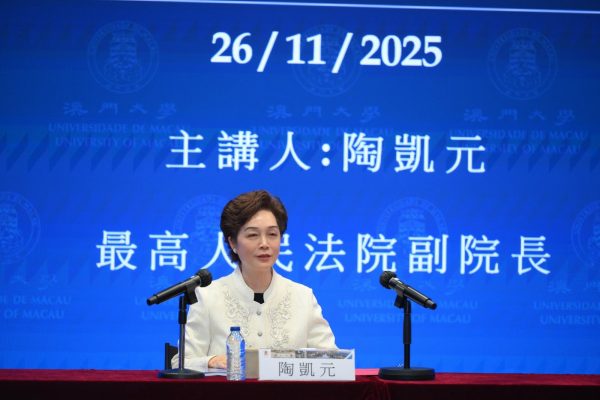
陶凱元
Tao Kaiyuan
最高人民法院副院長於澳大談知識產權司法保護
澳門大學於11月26日舉行“大學講壇”,由最高人民法院副院長、二級大法官陶凱元以“科技創新背景下中國知識產權司法保護的機遇、挑戰與應對”為題發表演說,深入探討中國知識產權司法保護的新形勢、新任務及司法應對,吸引澳門社會各界參與。
澳大副校長許敬文指出,澳門特區在跨境AI知識產權糾紛解決、國際規則銜接等領域獨具優勢,澳大亦一直致力推動跨境知識產權保護、人工智能知識產權等前沿領域的發展,期望培養更多兼具國際視野與愛國愛澳情懷的法律人才。
講座中,陶凱元圍繞科技創新背景下中國知識產權司法保護的機遇、挑戰與應對作出了全面講解和深入闡釋。她表示,當前知識產權司法國際競爭日趨激烈,為應對新形勢,需要堅持嚴格保護、堅持利益平衡、堅持實質性化解矛盾糾紛、堅持統籌推進國內法治和涉外法治、堅持專業化審判體系建設。
澳大法學院院長唐曉晴主持講座並介紹學院情況,他感謝最高人民法院大力支持設立中國—葡語國家司法法律研究中心,以及澳大與國家法官學院聯合舉辦中國高級法官培訓項目等工作。
另外,最高人民法院研究室副主任司豔麗、知識產權法庭副庭長朱理,深圳市中級人民法院知識產權法庭三級高級法官祝建軍分別與談,圍繞中國知識產權司法保護,從不同角度介紹情況並提出獨到見解。
出席講座的還有澳門特別行政區派駐終審法院法官何偉寧及一眾中級法院與初級法院法官,最高人民法院辦公廳祕書劉岩岩,香港中文大學法律學院院長習超,澳大圖書館館長徐鴻、人文社科高等研究院副院長稅兵、法學院助理院長汪超等。
欲瀏覽官網版可登入以下連結:
https://www.um.edu.mo/zh-hant/news-and-press-releases/press-release/detail/62791/
Vice president of Supreme People’s Court gives talk on judicial protection of intellectual property rights at UM
The University of Macau (UM) held a talk titled ‘Judicial Protection of Intellectual Property in China: Opportunities, Challenges, and Strategic Responses in the Era of Technological Innovation’ on 26 November as part of the University Lecture Series. Tao Kaiyuan, vice president of the Supreme People’s Court and grand justice of the second rank, discussed new developments and institutional responses in the judicial protection of intellectual property rights amid China’s rapid technological innovation. The talk attracted a large and diverse audience.
UM Vice Rector Michael Hui highlighted the university’s commitment to advancing cross-border intellectual property protection and intellectual property issues related to artificial intelligence. He added that UM aims to cultivate more legal professionals who possess an international outlook and demonstrate dedication to both the country and Macao.
During the lecture, Tao discussed the opportunities, challenges, and responses related to judicial protection of intellectual property rights in China in the context of technological innovation. She noted that it is essential to maintain strict protection, balance competing interests, effectively resolve conflicts and disputes, coordinate the development of domestic and foreign‑related rule of law, and strengthen the specialised trial system.
To read the news on UM’s official website, please visit the following link:
https://www.um.edu.mo/news-and-press-releases/press-release/detail/62791/