News Express: UM hosts 5th International Conference on Regenerative Medicine
新聞快訊:澳大辦第五屆再生醫學國際會議
第五屆粵港澳大灣區再生醫學國際會議
The 5th International Conference of Guangdong-Hong Kong-Macau Greater Bay Area on Regenerative Medicine
澳大辦第五屆再生醫學國際會議
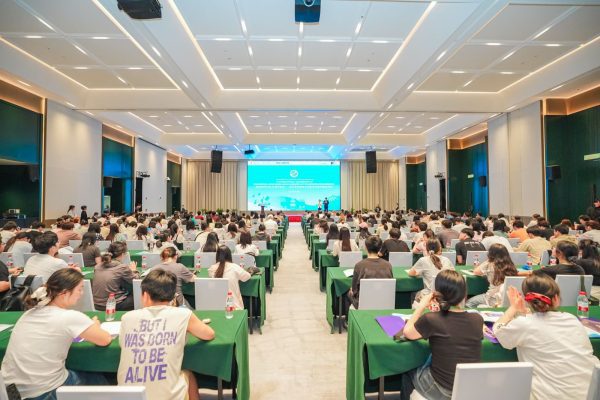
為慶祝澳門大學45周年校慶,澳門大學健康科學學院與橫琴澳門大學高等研究院合辦“第五屆粵港澳大灣區再生醫學國際會議”。會議於澳琴兩地同步舉行,吸引約400位來自世界各地的再生醫學領域知名學者、臨床醫學專家、業界專業人士、研究人員及研究生參與,深入探討再生醫學的最新科研進展與臨床應用轉化。
澳大副校長葛偉表示,澳大迅速發展為國際知名研究型大學,並正在建設合作區校區,實踐跨境“一校兩區”一體化管理的創新發展模式,進一步提升在科研與人才培養方面的實力。近年,粵港澳大灣區再生醫學國際會議已成為推動區域再生醫學科研與創新的重要平台,今年適逢澳大45周年校慶,更具特殊意義。今屆會議以“解碼多能性與重塑療法”為主題,聚焦幹細胞、再生醫學及跨學科合作,體現再生醫學連結基礎研究與臨床應用的核心價值。另外,會議分別於澳門與橫琴舉行,象徵粵港澳大灣區人才、思想與創新的深度融合與流動。
澳大健康科學學院副院長兼會議共同主席徐仁和表示,該會議旨在搭建高水平的國際學術交流平台,匯聚再生醫學領域的專家學者,促進跨機構與跨學科的深入交流與合作,推動區域內再生醫學研究的協同發展。會議涵蓋的研究主題橫跨多個傳統與新興方向,包括發育生物學、幹細胞生物學、再生醫學、細胞與基因治療、人工智慧在相關生物醫學領域的應用等,致力加強基礎研究與臨床轉化之間的緊密連結,加快科研成果向實際應用的轉變。
今屆會議共設兩場大會主旨講座及七場分論壇學術報告。在主旨演講中,中國科學院院士、昆明理工大學特聘教授季維智展示了其研究團隊在早期人類發育研究方面的突破性進展,透過人類胚胎培養及胚胎模型系統,揭示著床後發育階段的重要生物學機制。香港科技大學講座教授、嘉里理學教授解亭則分享了其以微環境調控促進人類視網膜幹細胞長期擴增的研究進展,並展示該技術在視覺退化疾病治療中的應用前景。兩場主旨演講從基礎生命科學到轉化醫學應用,充分展現再生醫學跨越研究層次、連結臨床需求的廣闊前景,亦為未來精準醫療與創新治療策略的發展帶來重要啟示。
分論壇學術報告豐富精彩,講者介紹了源自神經上皮的多能神經幹細胞於中樞神經系統外的存在與功能、如何利用人類誘導多能幹細胞(hiPSC)衍生的多巴胺能祖細胞治療帕金森氏症、iPSC衍生神經細胞療法於亨丁頓舞蹈症的臨床轉化應用、人類誘導多能幹細胞衍生免疫細胞於治療上的應用、人類誘導多能幹細胞衍生免疫細胞於治療上的應用等。部分講題更延伸至創新臨床概念,如顱骨手術作為治療阿茲海默症的新型策略等。另外,研討會一共展出50多份優秀牆報,並由評獎委員會對其作出專業選評,甄選出多個獲獎作品。
澳門特別行政區政府經濟及科技發展局副局長陳祖榮、橫琴粵澳深度合作區民生事務局副局長蘇凱慈、澳門科技大學副校長譚廣亨、遵義醫科大學副校長李均、中山大學附屬第五醫院副院長陳明遠、廣州醫科大學附屬第一醫院橫琴醫院副院長馮晉康、離島醫療綜合體北京協和醫院澳門醫學中心內科部主任冷曉梅、珠海市人民醫院轉化醫學研究院主任孟雅、廣東省智能科學與技術研究院研究員時穎超及劉學釗、澳門大學健康科學學院院長鄧初夏、橫琴澳門大學高等研究院常務副院長陳國凱等出席會議。
欲瀏覽官網版可登入以下連結:
https://www.um.edu.mo/zh-hant/news-and-press-releases/press-release/detail/63793/
UM hosts 5th International Conference on Regenerative Medicine
In celebration of the 45th anniversary of the University of Macau (UM), the UM Faculty of Health Sciences (FHS) and the University of Macau Advanced Research Institute in Hengqin jointly organised the 5th International Conference of Guangdong-Hong Kong-Macau Greater Bay Area on Regenerative Medicine. Held concurrently in Macao and Hengqin, the conference brought together about 400 leading scholars, clinical experts, industry professionals, researchers, and postgraduate students from around the world to explore the latest scientific advances and clinical applications in regenerative medicine.
Ge Wei, vice rector of UM, said that UM has rapidly developed into an internationally recognised research-oriented university. As its campus in the Guangdong-Macao In-Depth Cooperation Zone in Hengqin continues to develop, the university will implement an innovative ‘one university, two campuses’ cross-border integrated management model. This will further strengthen the university’s capabilities in scientific research and talent development. He added that, in recent years, the International Conference of Guangdong-Hong Kong-Macau Greater Bay Area on Regenerative Medicine has become an important platform for advancing regional research and innovation in the field. This year’s conference is of particular significance as it coincides with UM’s 45th anniversary. Themed ‘Decoding Pluripotency & Reshaping Therapy’, the conference focused on stem cells, regenerative medicine and interdisciplinary collaboration, and highlighted the core value of regenerative medicine in linking basic research with clinical application. Held in both Macao and Hengqin, the conference symbolised the deep integration and dynamic flow of talent, ideas, and innovation within the Greater Bay Area.
Xu Renhe, associate dean of UM FHS and co-chair of the conference, noted that the event aimed to establish a high-level international platform for academic exchange. By bringing together experts and scholars in regenerative medicine, the conference sought to promote in-depth cross-institutional and interdisciplinary exchange and collaboration, and to advance the coordinated development of regenerative medicine research in the region. It covered a wide range of traditional and emerging fields, including developmental biology, stem cell biology, regenerative medicine, cell and gene therapy, and the application of artificial intelligence in biomedical sciences. There was a particular focus on strengthening the close link between basic research and clinical translation, and accelerating the transformation of research outcomes into practical applications.
The conference featured two plenary keynote lectures and seven thematic sessions. In his keynote lecture, Ji Weizhi, academician of the Chinese Academy of Sciences and Distinguished Professor at Kunming University of Science and Technology, presented the significant advances made that his research team has made in the field of early human development. Using human embryo culture and embryo model systems, his team has revealed key biological mechanisms during post-implantation development. Xie Ting, chair professor and Kerry Holdings Professor of Science at The Hong Kong University of Science and Technology, presented his research on promoting the long-term expansion of human retinal stem cells through microenvironmental regulation, and demonstrated their therapeutic potential for degenerative eye diseases. With a focus on basic life sciences and translational medical applications, the two keynote lectures illustrated the broad prospects of regenerative medicine in various research areas and clinical practices, offering valuable insights into the future development of precision medicine and novel therapeutic strategies.
The thematic sessions offered a wealth of content, with speakers presenting on topics including: the presence and functions of pluripotent neural stem cells derived from neuroepithelium outside the central nervous system; the treatment of Parkinson’s disease using dopaminergic progenitors derived from human-induced pluripotent stem cells (hiPSCs); the clinical translation of iPSC-derived neuronal cell therapies for Huntington’s disease; and the therapeutic applications of immune cells derived from hiPSCs. Some presentations covered innovative clinical concepts, such as cranial surgery as a novel therapeutic strategy for Alzheimer’s disease. In addition, over 50 outstanding research posters were displayed at the venue. The posters were evaluated by the awards committee, with some being selected for the Best Poster Award.
The conference was attended by Chan Chou Weng, deputy director of the Economic and Technological Development Bureau of the Macao SAR government; Sou Hoi Chi, deputy director of the Livelihood Affairs Bureau of the Guangdong-Macao In-Depth Cooperation Zone in Hengqin; Paul Kwong Hang Tam, vice president of the Macau University of Science and Technology; Li Jun, vice president of Zunyi Medical University; Chen Mingyuan, vice president of the Fifth Affiliated Hospital of Sun Yat-sen University; Feng Jinkang, vice president of the First Affiliated Hospital of Guangzhou Medical University Hengqin Hospital; Leng Xiaomei, director of the Department of Internal Medicine at the Islands Healthcare Complex – Macao Medical Center of Peking Union Medical College Hospital; Meng Ya, director of the Institute of Translational Medicine at Zhuhai People’s Hospital; Shi Yingchao and Liu Xuezhao, researchers at the Guangdong Institute of Intelligence Science and Technology; Chuxia Deng, dean of UM FHS; and Chen Guokai, executive deputy director of the University of Macau Advanced Research Institute in Hengqin.
To read the news on UM’s official website, please visit the following link:
https://www.um.edu.mo/news-and-press-releases/press-release/detail/63793/